
Craniosacral Therapy in Camden, London NW1
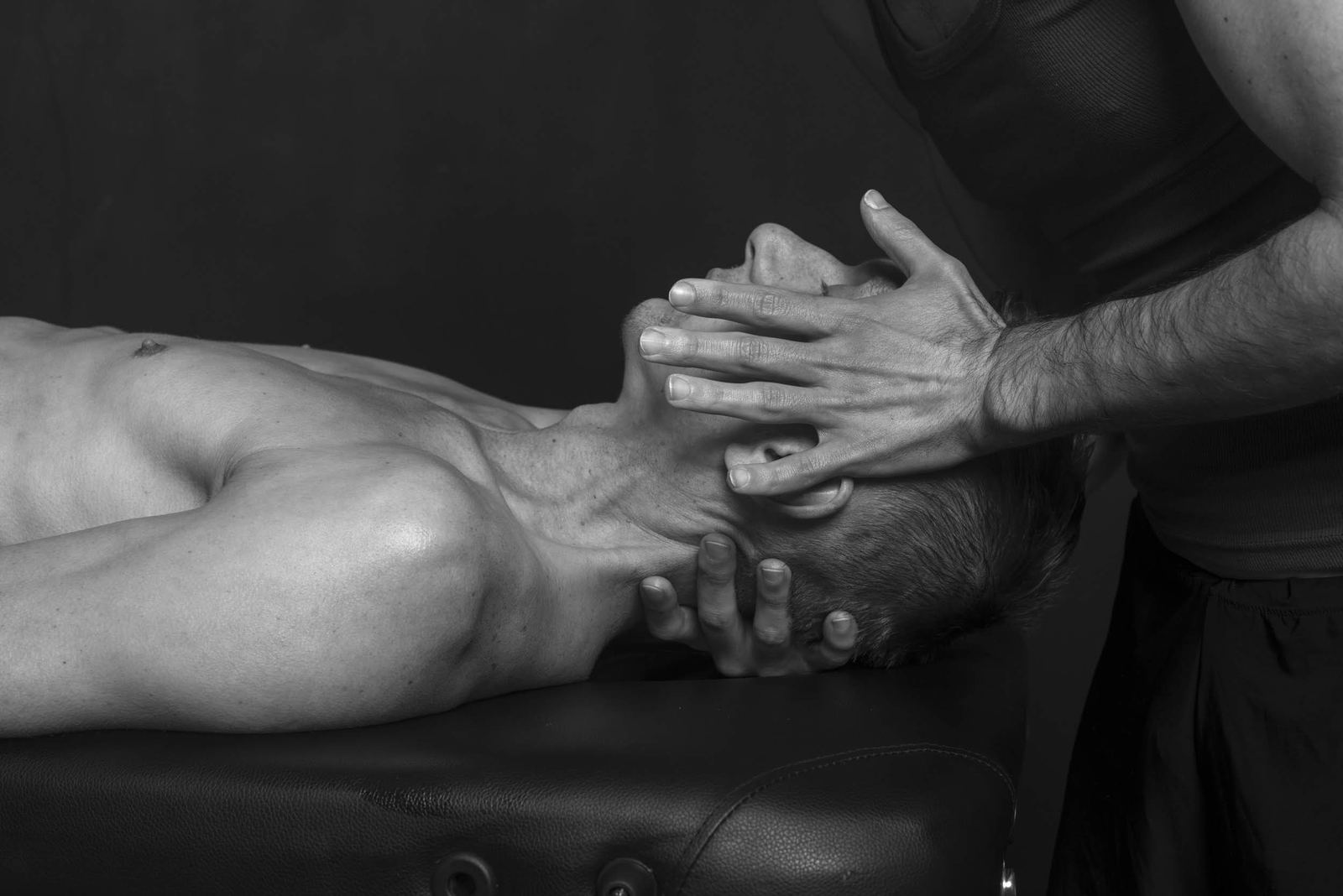
What happens during a craniosacral therapy session?
Rest fully clothed on the treatment table for quiet, gentle-touch treatment, without oil, deep pressure or forceful manipulation. Still, light contact around the head, neck, back and sacrum is used to support the body’s existing rhythm.
What is the craniosacral system, and how does this approach work with it?
This gentle therapeutic system centres on the membranes and fluid surrounding the brain and spinal cord, from cranium to sacrum. The cerebrospinal fluid is produced by the choroid plexus, in the brain’s ventricles. It circulates through the ventricular system and subarachnoid space around the brain and spinal cord before reabsorption. Light contact attends to a perceived fluid tide, encouraging natural movement where it feels restricted, rather than forcing it.
How does a session aim to support a sense of balance?
The aim is settling, restoration, calmness and serenity: a comfortable physical balance between activation and rest, the golden line of this work. The autonomic nervous system’s sympathetic side prepares you for effort; its parasympathetic side supports rest, digestion and recovery, creating conditions for ongoing repair. The vagus nerve is a major parasympathetic nerve.
What might I feel after a session?
The approach trusts the body’s ability to reset itself, offering stillness for that process. People often describe emotional clearing, a clearer mind and release of physical strain afterwards.
How does your experience shape the way you work?
Fourteen years of hands-on practice and the improvements I see in clients shape my work. Beyond a pleasant hour’s relaxation, I help you discover physical ease, emotional breathing space and greater comfort in your body.
How do familiar patterns of tension develop?
The body adapts to repetition. Work, training, everyday movements and prolonged strain can make uncomfortable ways of holding yourself feel normal. Physical tension and emotional stress can reinforce each other. Recognising patterns opens a practical route to change, without blaming you for symptoms that may have several causes.
How can a session help me experience less tension?
In a gentle, attentive setting, we seek settling, comfort and release of felt tension rather than pushing through resistance. A session can bring a tangible shift: feeling less held, calmer, or clearer about unnecessary effort. These meaningful experiences give you something concrete to recognise beyond the treatment room.
Can one session make a meaningful difference?
One session can make a meaningful difference without undoing years of habit, establishing a new reference point: “This is another way I can feel.” By “body memory”, I mean recognising an alternative you can inhabit and make familiar — building confidence in returning to ease, beyond temporary escape from discomfort.
How can I build on changes between sessions?
My massage and movement work also addresses patterns, though methods differ. Comfortable movement, appropriate recovery and small daily changes help sustain progress between sessions. We review your changes and adapt to your response. Persistent physical or emotional difficulties may also need healthcare, with hands-on care supporting that wider picture. The aim: less unnecessary effort, more freedom, and balance between activity and rest.
How extensively is the body supplied with sensory nerves?
Sensory endings throughout the skin, muscles, joints and internal organs continually report touch, movement and internal state; nerve density and type vary by tissue. A classic human nerve-recording study estimated about 241 low-threshold touch-sensitive nerve units per square centimetre of fingertip skin, versus about 58 in the palm. These site-specific estimates cannot represent every body area. Each unit comprises a sensory nerve fibre and its associated endings.
How do sensory signals shape sensation and muscle guarding?
Touch receptors convert pressure and skin stretch into electrical impulses, travelling through sensory nerves to the spinal cord and brain; facial touch travels through cranial nerves. Muscle and joint receptors report stretch, position and movement; organ sensory pathways report internal condition. The brain combines these signals with attention, past experience and context, shaping sensation and protective responses such as muscle guarding. Pain is real, but intensity does not directly measure tissue damage; stress and poor sleep can heighten sensitivity.
How does the autonomic nervous system relate to rest and ease?
The autonomic nervous system regulates heart rate and digestion and helps adjust breathing; parasympathetic pathways support rest and digestion. Sensory input, attention and relaxation during a session help you recognise reduced effort, greater ease and physical calm.
How can the nervous system learn a more comfortable way of moving?
The nervous system learns through experience and repeated practice. Remembering comfort and exploring manageable movement between sessions builds familiarity and confidence. These established processes explain why sensation, context and practice matter.
What has human research found about cranial techniques and nerve activity?
Beyond a relaxation metaphor, a small controlled human study of CV4, a cranial technique used in osteopathic and craniosacral practice, directly recorded reduced sympathetic nerve activity during treatment. This autonomic branch supports mobilisation and alertness. The findings offer preliminary evidence that cranial manual work can influence nervous-system activity, not that every technique or session produces the same measured effect.
What is neuroimmune communication?
Nervous and immune systems communicate continuously: nerve chemicals influence immune cells, while immune signals, including cytokines, influence nerve activity. This two-way neuroimmune communication helps coordinate inflammation, defence and tissue maintenance, connecting nervous-system regulation and immune function rather than leaving them isolated.
What has human research found about related manual care and inflammatory markers?
A small human pilot of a related osteopathic technique at the head–neck junction reported heart-rate variability changes and lower baseline levels of several salivary inflammatory markers over three days. This supports investigating manual care and neuroimmune regulation together. Findings remain preliminary: eight people received the technique, not full craniosacral treatment, and organ repair was not measured.
How does the fluid-tide model relate to the human research?
Gentle, responsive contact aims to support ease and adaptability. Craniosacral practice uses the “fluid tide” as a model for attending to subtle rhythms. Human findings support further autonomic and neuroimmune research, but do not yet establish that enhancing the tide restores organ function. Meaningful improvements in how you feel can be recognised while precise mechanisms remain under investigation.
Where can I read the research?
Human research: Cutler and colleagues: cranial manipulation and sympathetic nerve activity; Kania and colleagues: a related osteopathic technique, autonomic measures and inflammatory markers. Background: nervous–immune system communication.
Fingertip measurements: Johansson and Vallbo, 1979. Further reading: how touch signals travel, how pain is processed, and parasympathetic functions.
What have reviews found about craniosacral therapy for chronic pain?
A 2019 review of 10 randomised trials involving 681 people with chronic pain found lower reported pain and disability scores with craniosacral therapy than sham treatment, with differences at six months. Findings were preliminary: few trials, varied conditions and often unclear methods. A 2024 review of 15 randomised trials found no clinically meaningful improvement across assessed conditions, including headache, neck and lower-back pain, pelvic-girdle pain and fibromyalgia. Evidence is mixed: promising earlier results were not confirmed as meaningful benefits across those conditions by the later review.
Where can I read the systematic reviews?
Read the 2019 systematic review and the 2024 systematic review.
How can I book a session?
Give yourself an hour or more of real stillness.
Call, text or WhatsApp: 07909 147494
How long are sessions, and where do they take place?
Sessions are 60, 90 or 120 minutes, at the same prices as all treatments. PranaMassage is fully insured. Craniosacral therapy is available in Camden, London NW1, a short walk from Camden Town station.